
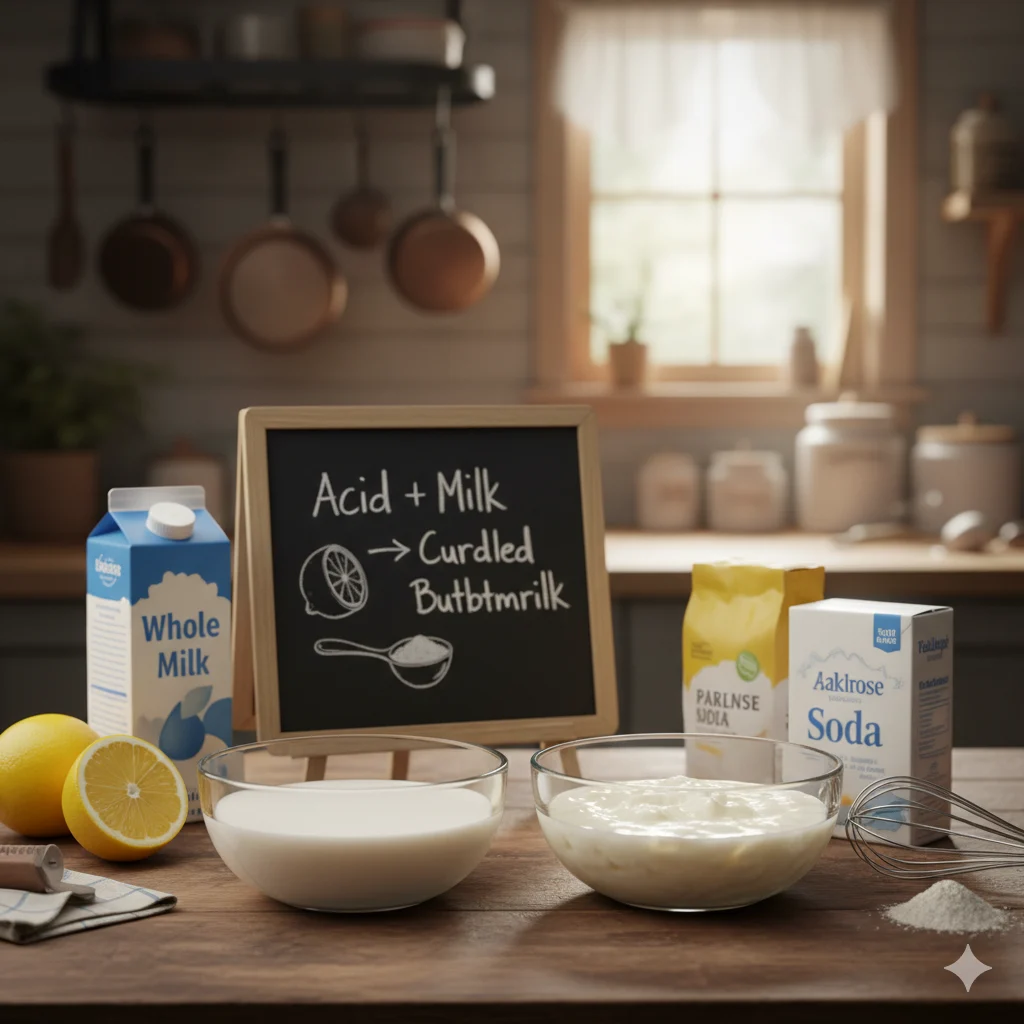
EMERGENCY FIXES – Tap to Jump:
- 🔥 IN THE MIDDLE OF BAKING? – 2-minute buttermilk fix
- 🧪 SUBSTITUTE NOT WORKING? – Why it failed & how to fix
- 🍗 MAKING FRIED CHICKEN? – Best buttermilk for marinades
- 🌱 DAIRY-FREE NEEDED? – Plant-based solutions that work
That moment when you’re halfway through your famous pancake recipe or ready to marinate chicken, only to discover you’re out of buttermilk. The panic is real, and most quick substitutes fail to explain WHY they work or WHEN to use them.
Here’s what most guides don’t tell you: Not all buttermilk substitutes are created equal. The right choice depends on your recipe, and understanding the science prevents kitchen disasters. This guide provides recipe-specific solutions backed by food science.
The Science Behind Buttermilk Substitutes
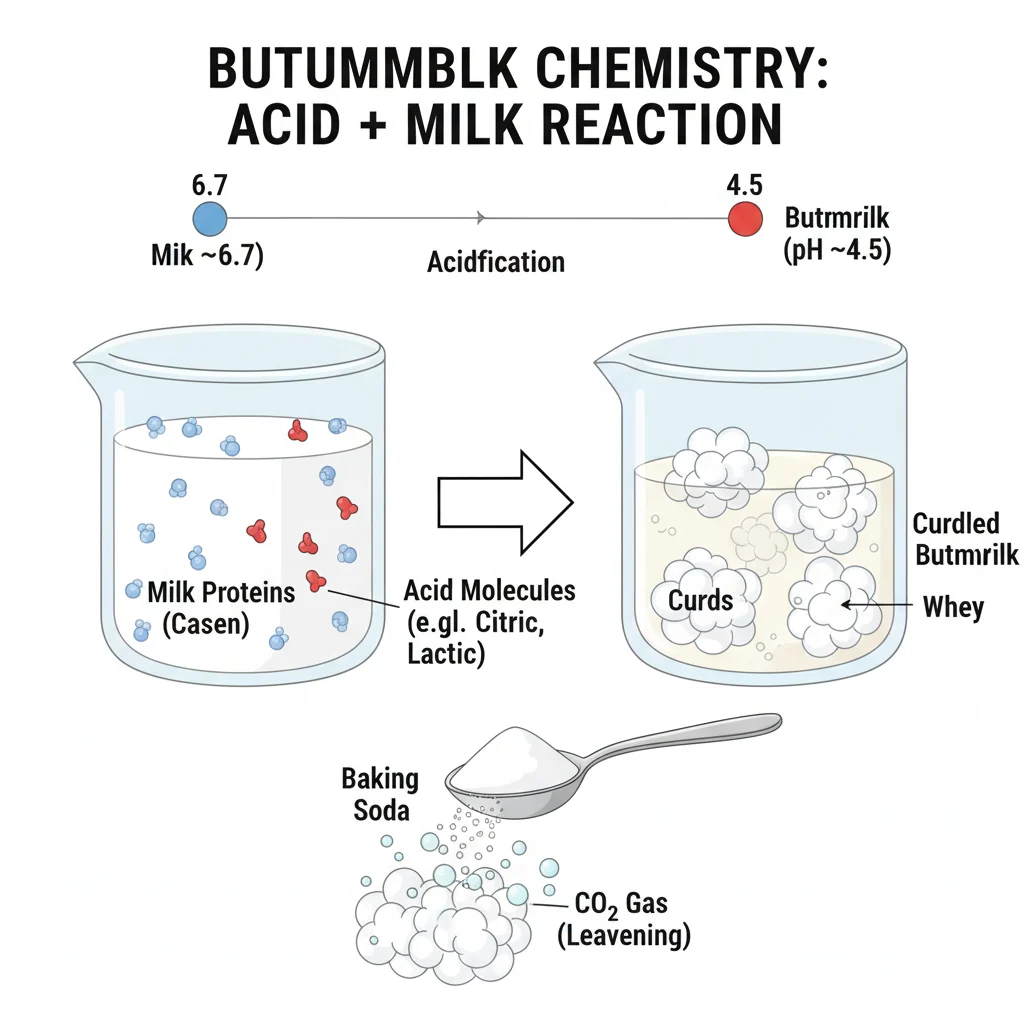
Why Acid + Milk Works:
Traditional buttermilk is acidic (pH around 4.5). When you add acid to milk, you:
- Lower the pH to mimic real buttermilk
- Create curds that tenderize baked goods
- Activate baking soda for proper rise (critical for fluffy pancakes)
The Baking Soda Reaction:
Buttermilk’s acidity + Baking soda → Carbon dioxide bubbles → Lift and rise
This is why measuring accurately matters! Too little acid = dense baked goods.
Emergency Buttermilk Substitute (2-Minute Fix) <a id=”emergency”></a>
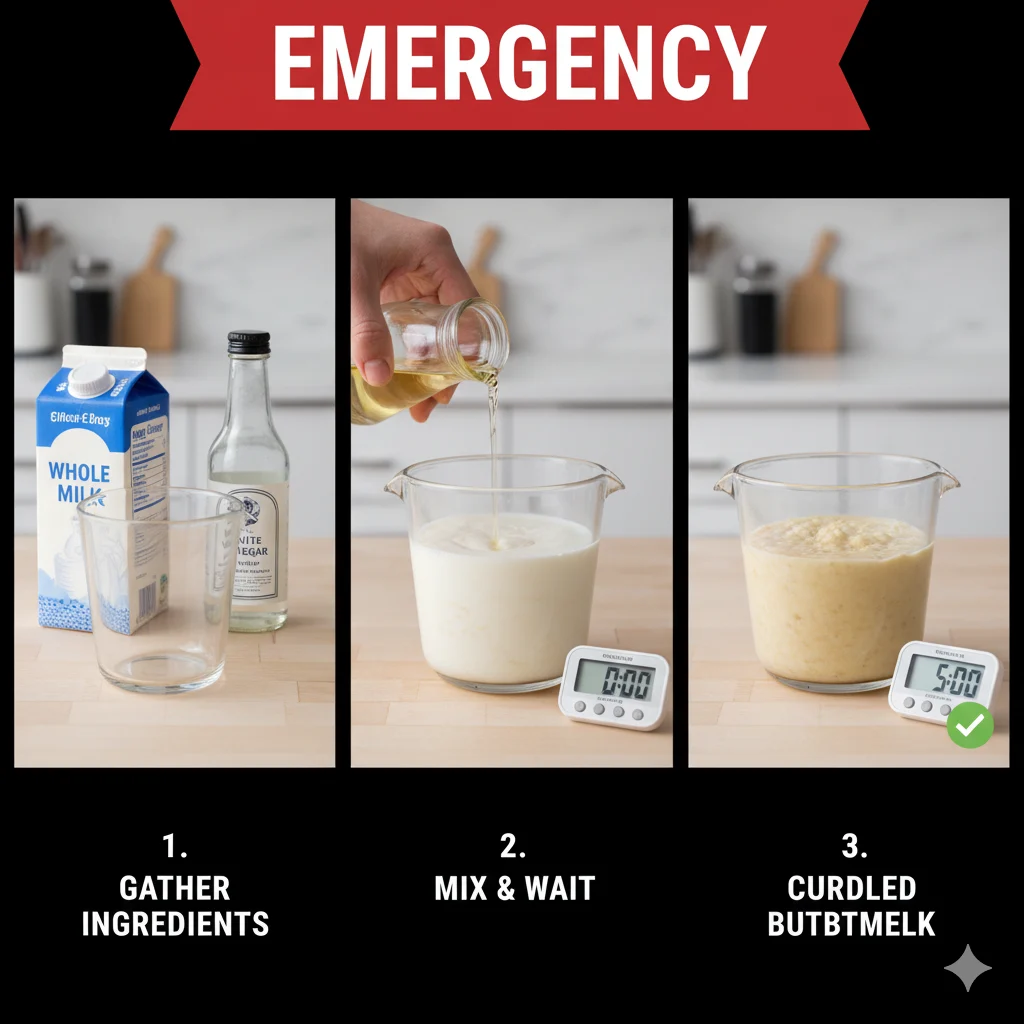
When to use: Any baking recipe (pancakes, cakes, muffins, biscuits)
Ingredients & Ratio:
- 1 cup whole milk (2% works, avoid skim)
- 1 tablespoon white vinegar OR fresh lemon juice
Step-by-Step Instructions:
- Measure precisely – Use liquid measuring cup for milk
- Add acid – 1 tablespoon vinegar or lemon juice
- Stir gently and wait 5-10 minutes
- Check for curdling – should look slightly thickened with small lumps
- Use immediately in your recipe
Alt-text: Side-by-side comparison of properly curdled buttermilk substitute with small lumps vs failed substitute that’s still smooth
Recipe-Specific Buttermilk Solutions
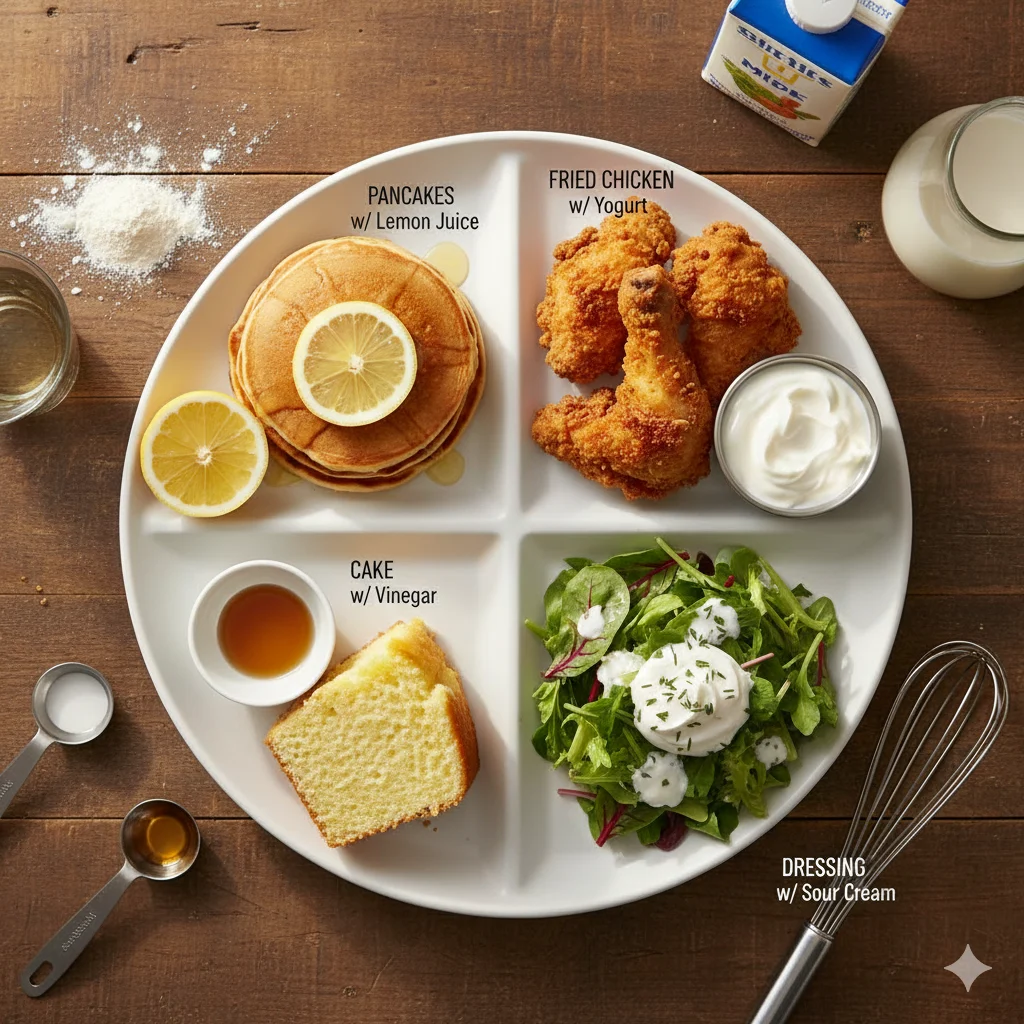
For Pancakes & Waffles <a id=”pancakes”></a>
Best Method: Milk + Lemon Juice
Why: Lemon juice provides subtle flavor that complements maple syrup
Pro Tip: Let batter rest 15 minutes for maximum fluffiness
For Fried Chicken & Marinades <a id=”fried-chicken”></a>
Best Method: Yogurt + Milk
Ratio: ½ cup Greek yogurt + ½ cup milk
Why: Thicker consistency clings to chicken better, tenderizes more effectively
For Cakes & Cupcakes
Best Method: Milk + White Vinegar
Why: Vinegar is flavor-neutral, won’t compete with vanilla or chocolate
Important: Use within 10 minutes of mixing
For Salad Dressings & Dips
Best Method: Sour Cream + Milk
Ratio: ⅔ cup sour cream + ⅓ cup milk
Why: Creates creamy, thick consistency perfect for emulsification
Dairy-Free Buttermilk Solutions <a id=”dairy-free”></a>
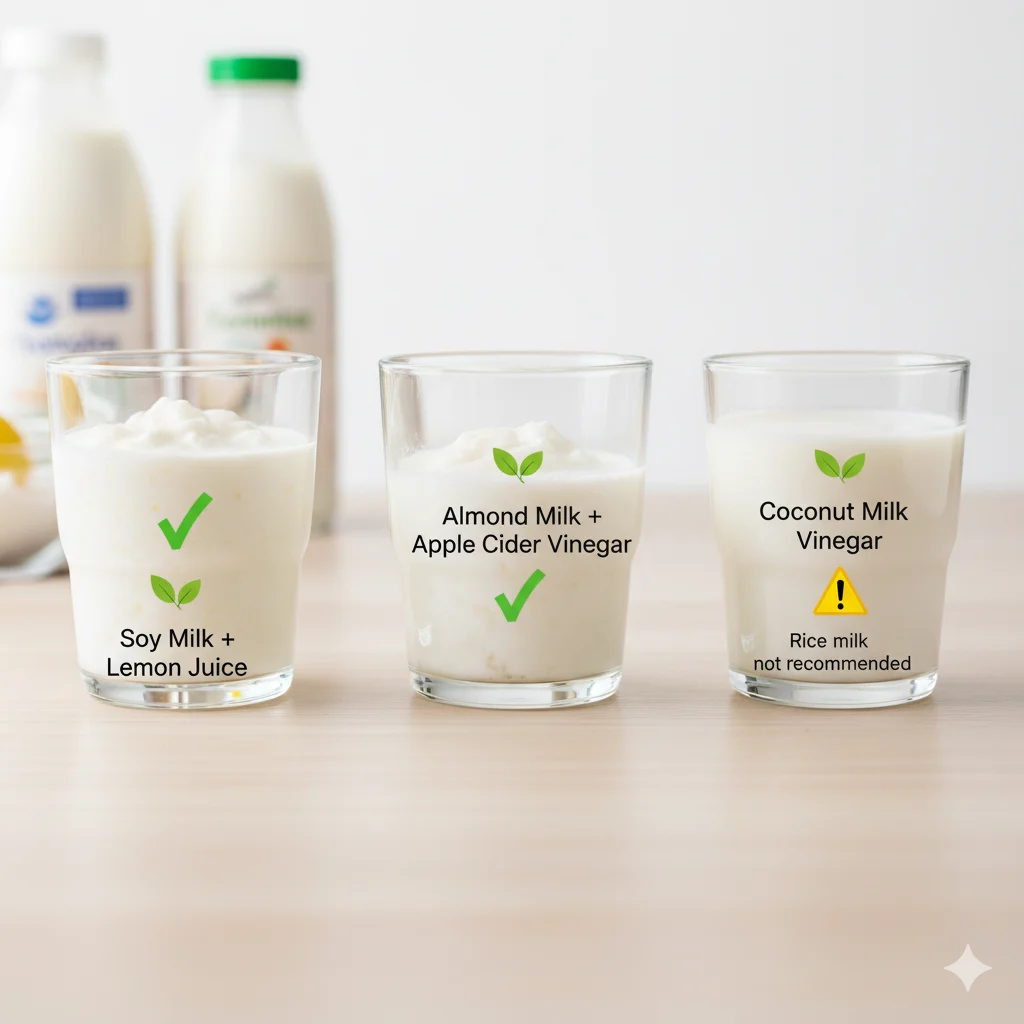
Best Plant-Based Options:
Soy Milk + Vinegar (Most reliable)
- 1 cup unsweetened soy milk + 1 tbsp vinegar
- Works like dairy milk in chemical reactions
Almond Milk + Lemon Juice
- 1 cup unsweetened almond milk + 1 tbsp lemon juice
- Lighter flavor, good for delicate recipes
Coconut Milk + Vinegar
- 1 cup canned coconut milk + 1 tbsp vinegar
- Rich option for tropical-flavored recipes
Avoid These for Baking:
- Rice milk (too thin)
- Oat milk (variable results)
- Sweetened plant milks (affects flavor)
Advanced: Make Real Cultured Buttermilk
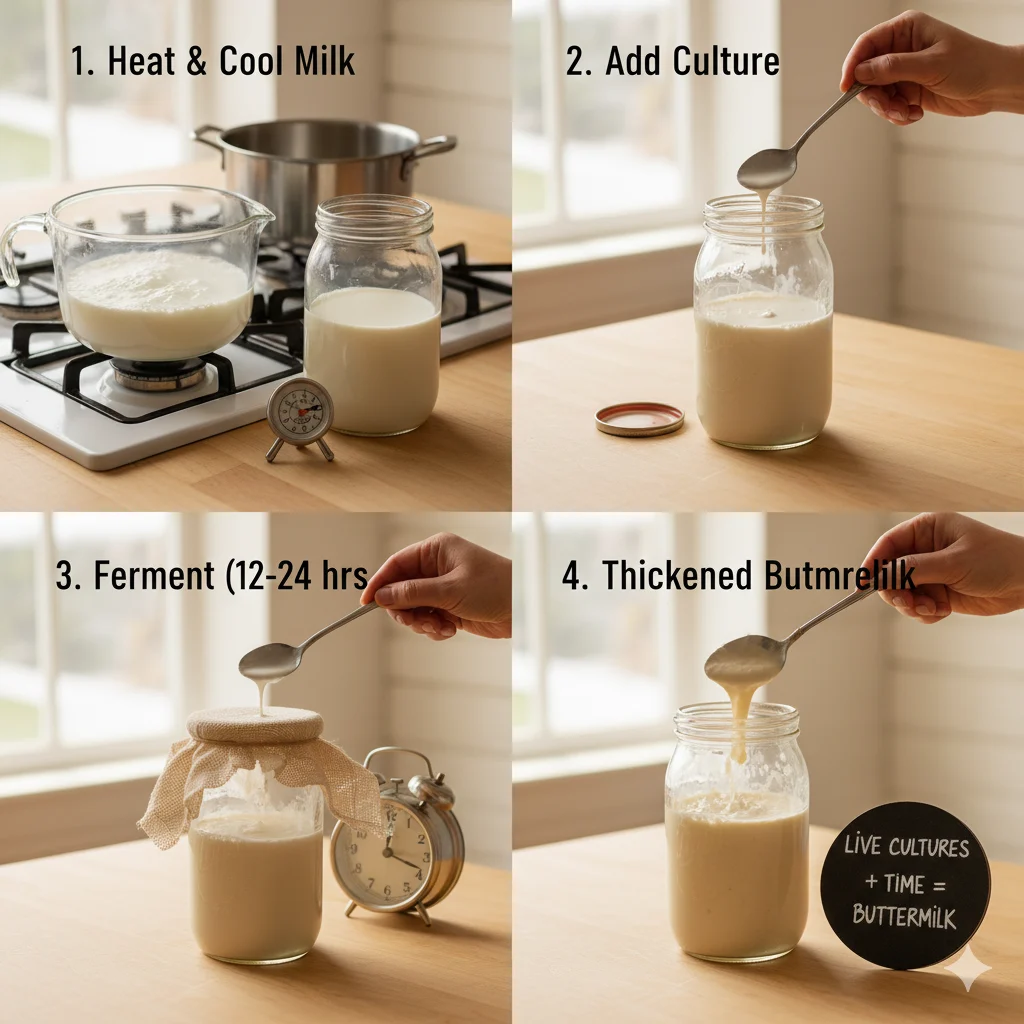
When to use: Regular buttermilk users, authentic flavor seekers
Ingredients:
- 4 cups pasteurized (not ultra-pasteurized) whole milk
- ½ cup store-bought cultured buttermilk with active cultures
Step-by-Step Instructions:
- Heat milk to 165°F (74°C) using thermometer
- Cool to 70°F (21°C) – critical temperature
- Add starter buttermilk, whisk thoroughly
- Cover with cloth and keep at 70°F for 18-24 hours
- Refrigerate when thickened and tangy
- Save ½ cup to make your next batch!
Troubleshooting Failed Substitutes <a id=”troubleshooting”></a>
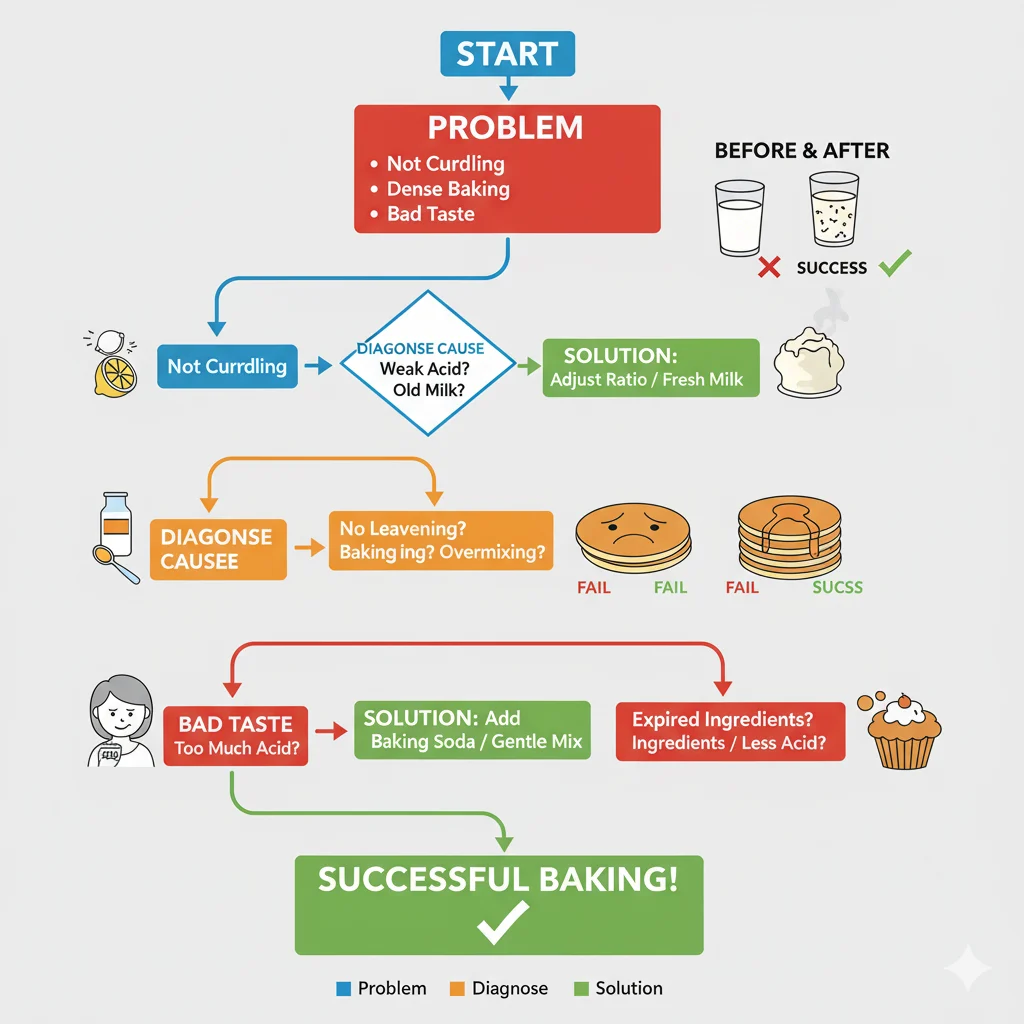
Problem: Milk Didn’t Curdle
Causes & Solutions:
- Ultra-pasteurized milk: Use regular pasteurized
- Old baking soda: Test by adding vinegar – should bubble vigorously
- Inaccurate measurements: Use measuring spoons, not estimation
- Not waiting long enough: Minimum 5 minutes at room temperature
Problem: Baked Goods Are Dense
Likely Causes:
- ❌ Not enough acid to activate baking soda
- ❌ Expired baking soda
- ❌ Skipped the resting time
- ❌ Wrong type of milk (skim milk doesn’t work well)
Problem: Strange Aftertaste
Solutions:
- Use white vinegar instead of apple cider vinegar
- Reduce lemon juice by 25% for delicate recipes
- Try cream of tartar instead (1¾ tsp per cup milk)
Buttermilk Substitute Comparison Chart
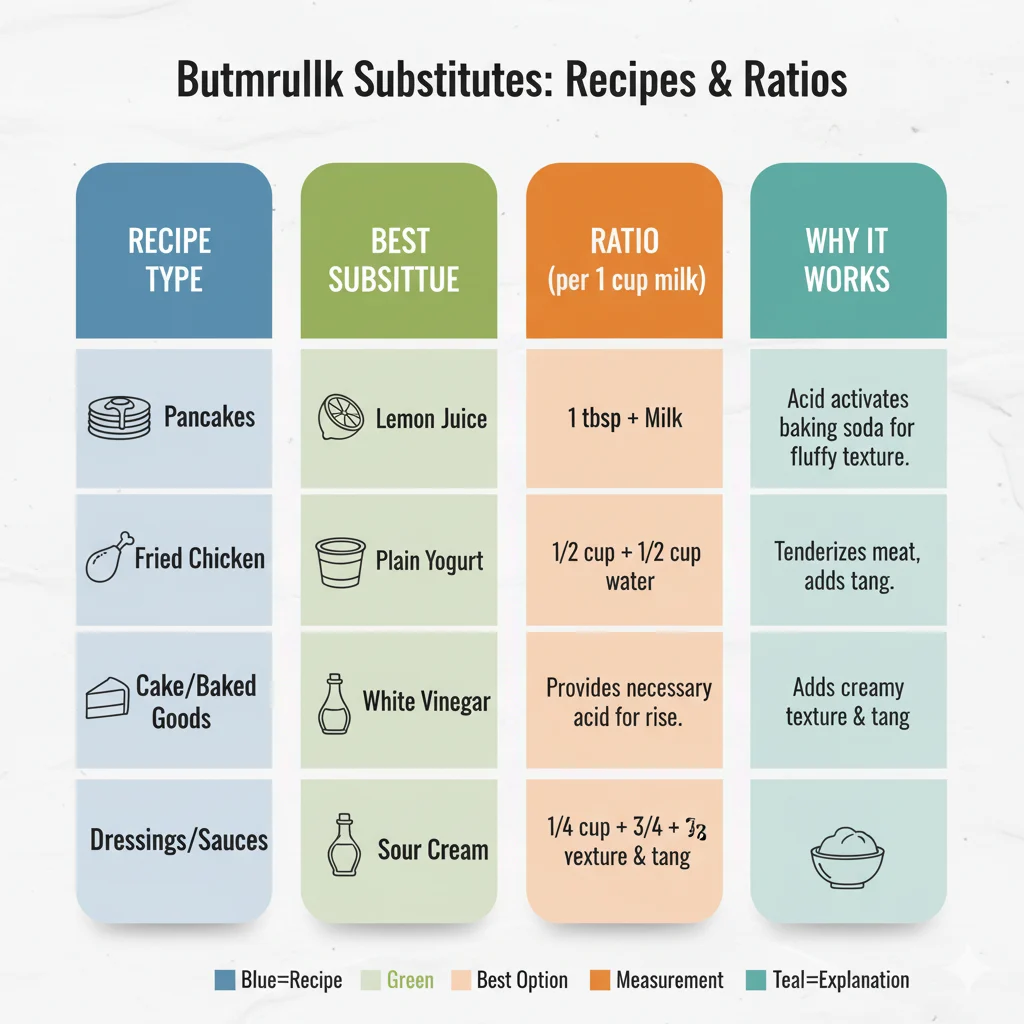
| Recipe Type | Best Substitute | Ratio | Why It Works |
|---|---|---|---|
| Pancakes/Waffles | Milk + Lemon Juice | 1 cup : 1 tbsp | Flavor complement, good rise |
| Fried Chicken | Yogurt + Milk | 1:1 ratio | Thick marinade, superior tenderizing |
| Cakes | Milk + White Vinegar | 1 cup : 1 tbsp | Neutral flavor, reliable rise |
| Biscuits | Milk + Cream of Tartar | 1 cup : 1¾ tsp | Maximum lift, flaky layers |
| Salad Dressing | Sour Cream + Milk | 2:1 ratio | Creamy emulsion, perfect thickness |
| Dairy-Free Baking | Soy Milk + Vinegar | 1 cup : 1 tbsp | Protein content mimics dairy |
Free Download: Buttermilk Solution Toolkit
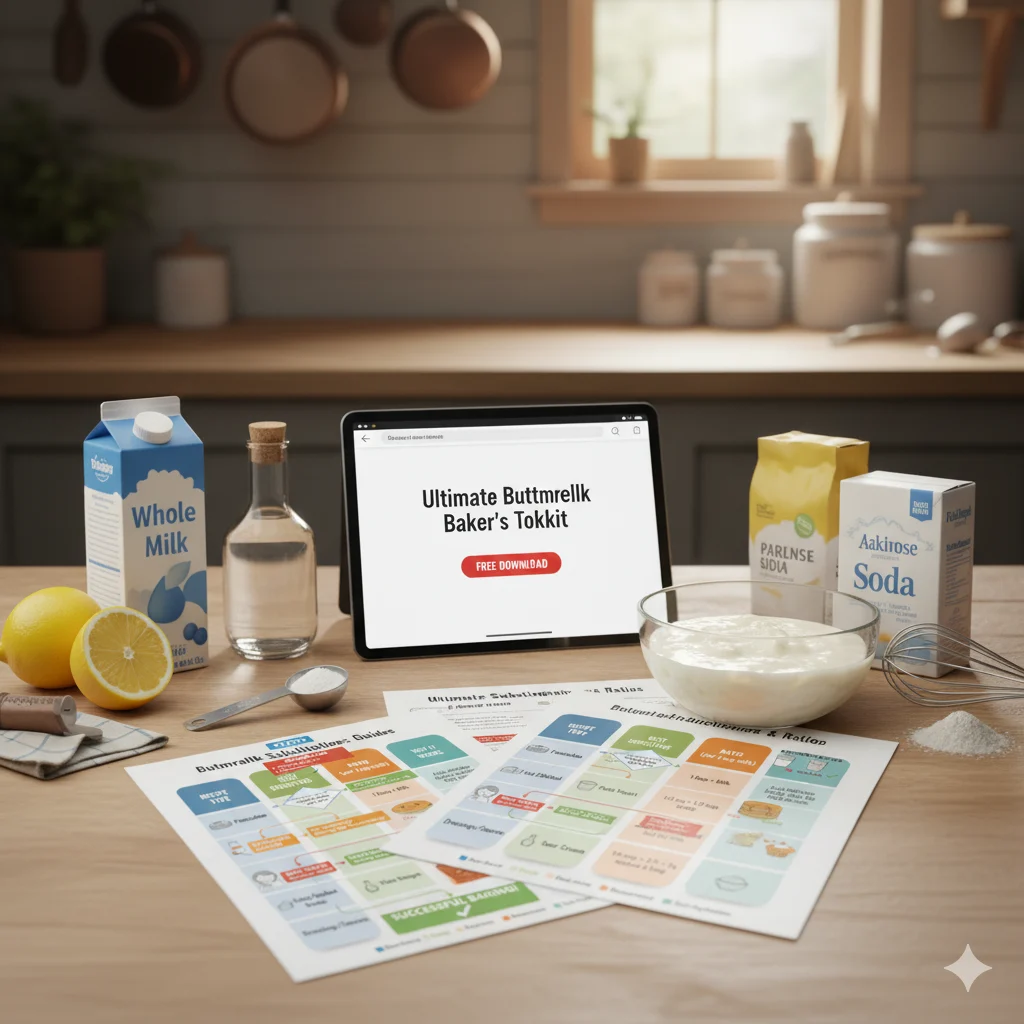
Download Our Science-Backed Resources:
- Recipe-Specific Substitution Guide
- Buttermilk Trouble-Shooting Flowchart
- Dairy-Free Conversion Calculator
- Baking Soda Freshness Test Guide
[Download Your Free Buttermilk Solution Toolkit]
Frequently Asked Questions (FAQ)
Q: Can I use apple cider vinegar instead of white vinegar?
A: Yes, but it may add slight flavor. Best for savory recipes like cornbread or marinades. Use white vinegar for delicate cakes.
Q: How long does homemade buttermilk substitute last?
A: The acid+milk version should be used immediately. Cultured buttermilk lasts 2 weeks refrigerated.
Q: Why does my buttermilk substitute look chunky?
A: Perfect! Those are milk proteins curdling – exactly what you want. They create tenderness in baked goods.
Q: Can I make buttermilk with almond milk?
A: Yes, but results vary. Soy milk works better due to higher protein content. Always use unsweetened versions.
Q: What’s the difference between buttermilk substitutes for baking vs marinades?
A: Baking needs the acid-baking soda reaction, so precise measurements matter. Marinades benefit from thickness (yogurt) for coating and tenderizing.
Conclusion: Never Fear Buttermilk Recipes Again
Your Go-To Solutions Matrix:
- Baking Emergency: Milk + Vinegar (measure precisely!)
- Fried Chicken: Yogurt + Milk (thick and clingy)
- Dairy-Free Needs: Soy Milk + Vinegar (most reliable)
- Plan Ahead: Make cultured buttermilk (authentic flavor)
Key Science Principles to Remember:
- Buttermilk’s acidity activates baking soda – measure accurately
- Curdling is good – it means the proteins are denaturing properly
- Temperature matters – room temperature works fastest
- Not all plant milks work equally – protein content determines success
Now you understand not just HOW to make buttermilk substitutes, but WHY they work and WHEN to use each method. No more kitchen disasters – just perfect pancakes, tender chicken, and fluffy cakes every time.

Michael Smith is the creator of PikupLab.com, known for crafting engaging, SEO-smart content that connects with modern audiences.
He specializes in turning niche topics into high-ranking, reader-focused articles.